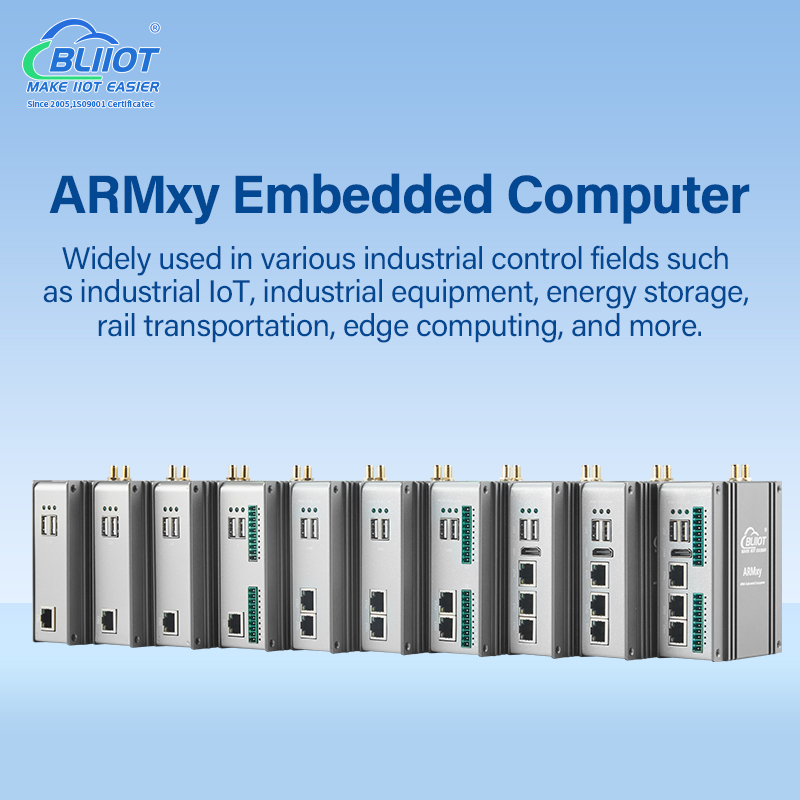
Discover how ARMxy industrial computers optimize solar PV systems with real-time monitoring, edge computing, and seamless integration for smart energy management.
Case Details
The rapid growth of renewable energy, particularly solar photovoltaic (PV) systems, demands advanced control and monitoring solutions. ARMxy industrial computers play a pivotal role in optimizing PV energy storage systems (ESS) by enabling real-time data processing, intelligent energy management, and seamless grid integration.
This article explores the technical applications of ARMxy in solar PV storage, covering:
-
Real-time monitoring & data acquisition
-
Battery management & state-of-charge (SOC) optimization
-
Grid interaction & demand response
-
Edge AI for predictive maintenance & fault detection
1. Real-Time Monitoring & Data Acquisition in PV Systems
Key Functions:
Technical Advantage:
ARMxy’s low-latency processing ensures rapid response to fluctuations in solar generation, improving energy harvest efficiency by 3-5%.
2. Battery Storage Management & Optimization
Key Applications:
Case Study: A 10MW Solar + Storage Plant
| Parameter |
Without ARMxy |
With ARMxy |
| Battery Lifespan |
8 years |
10+ years |
| Energy Efficiency |
88% |
93% |
| Fault Detection |
Manual checks |
AI-driven alerts |
3. Grid Integration & Demand Response
Smart Grid Interaction:
Compliance & Safety:
4. Edge AI for Predictive Maintenance & Fault Detection
AI-Driven Diagnostics:
-
Anomaly Detection:
-
Predictive Maintenance:
Example: Fault Detection in a Solar Farm
-
Data Input: Current/voltage fluctuations, temperature spikes.
-
AI Model: Identifies potential arc faults or PID (Potential Induced Degradation).
-
Action: Triggers alarms or isolates faulty panels automatically.
Conclusion: Why ARMxy is the Ideal Choice for PV Storage?
✅ High Reliability – Industrial-grade design for harsh environments (-40°C to +70°C).
✅ Seamless Protocol Support – Modbus, IEC 101, IEC 104, MQTT,OPC UA.
✅ AI & Edge Computing – Enables real-time decision-making without cloud dependency.
✅ Scalability – Modular I/O expansion for growing energy storage needs.