Discover how EA Series runs 4 industrial cameras with synchronized inference, sub-1ms sync, and under-10ms control response—closing the vision loop on one device.
Case Details
4-Channel Industrial Camera Synchronous Inference: How the EA Series Closes the “Acquisition–Inference–Control” Loop for Machine Vision
Machine vision is currently the most mature and in-demand scenario for industrial edge AI deployment. However, traditional solutions commonly suffer from the pain point of “separated acquisition and inference”: industrial cameras connect to an industrial PC via a capture card, and raw images are then transmitted to a server for AI inference. This not only creates a long link, high latency, and complex wiring, but also easily leads to frame drops and synchronization issues due to network fluctuations—ultimately affecting inspection accuracy and efficiency.
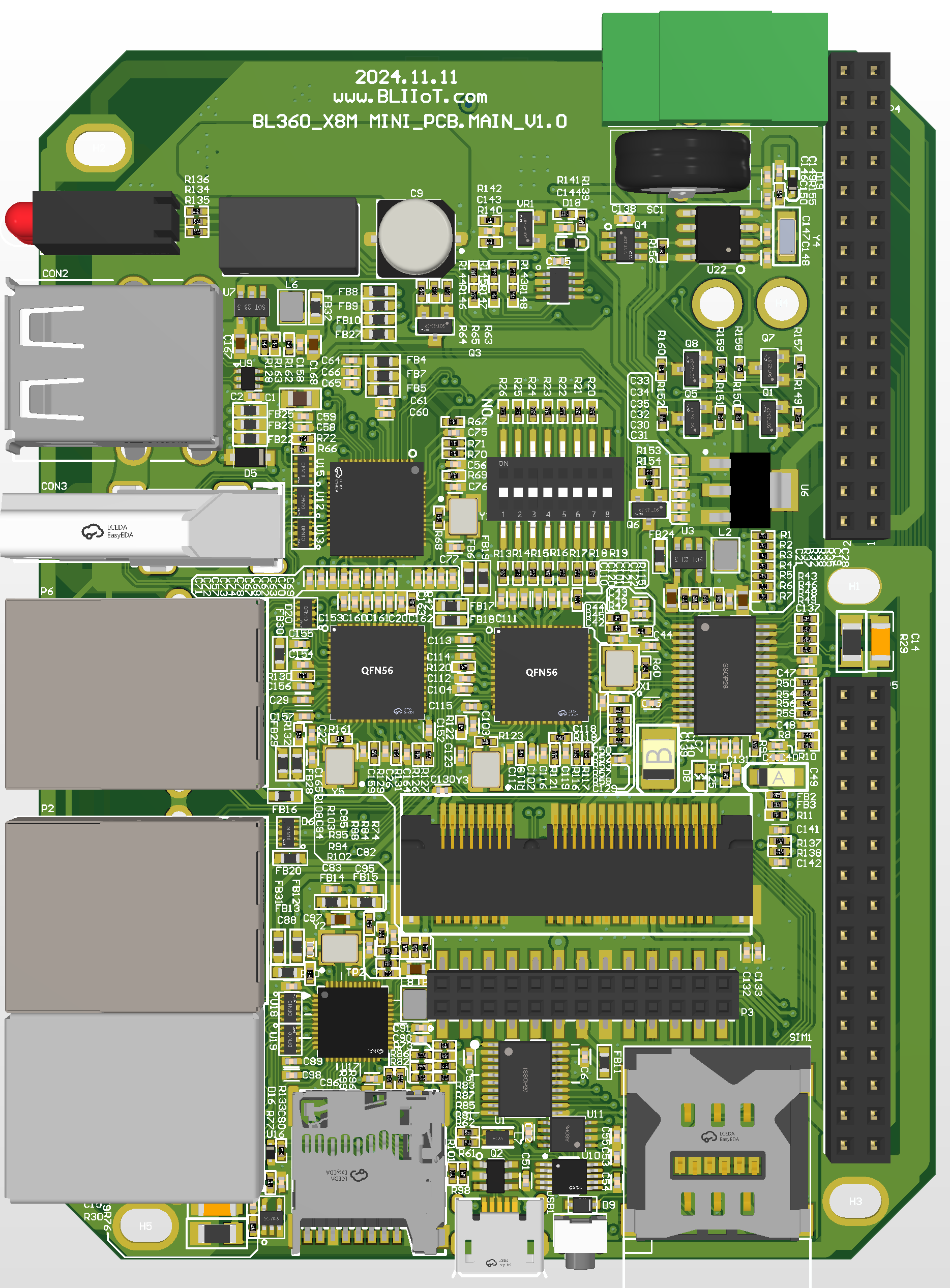
The EA Series has been deeply optimized at the hardware level for industrial vision scenarios, achieving a full-link closed loop of image acquisition, AI inference, logic control, and data upload on a single device. It eliminates the need for additional capture cards, industrial PCs, servers, and other equipment, greatly simplifying the deployment architecture of vision workstations. Taking the EA230 Pro and EA250 Pro as examples, three vision expansion options are available, covering the vast majority of industrial camera access requirements: 4× Gigabit PoE ports (supporting the GigE Vision protocol), 4× GMSL2 interfaces (FAKRA Z type, supporting Power over Coax, PoC), and 4-channel MIPI CSI-2 interfaces. A single board can connect up to 4 industrial cameras simultaneously, perfectly adapting to mainstream industrial camera brands such as Hikvision, Dahua, Basler, and Daheng, with drivers pre-integrated for plug-and-play.
In terms of performance, the EA Series supports precise multi-camera time synchronization. Based on the IEEE 1588 PTP protocol, the synchronous acquisition error of 4 cameras is less than 1 ms, ensuring temporal consistency for multi-view inspection. Take the appearance inspection scenario of 3C electronic middle frames as an example: one EA230 Pro can simultaneously connect 4× 5-megapixel industrial cameras to perform synchronous appearance defect inspection on the top, bottom, left, and right sides of the product. Images captured by the cameras enter the Jetson compute unit directly through the local bus. Relying on a TensorRT-quantized and accelerated YOLOv8 model, it completes the recognition and classification of defects such as scratches, pits, discoloration, and missing material. Single-frame inference latency is below 30 ms, and single-channel inspection frame rate remains stable above 30 FPS. At the same time, the device’s built-in industrial IO interfaces can directly link to sorting and rejection mechanisms. The moment a defective product is detected, a DO signal is triggered to drive the cylinder to complete the rejection action—with no host computer involved throughout the process, and end-to-end response time under 10 ms.
In addition to core inference and control capabilities, the EA Series also completes ecosystem adaptation across the entire vision chain: it supports commercial vision software such as Halcon and VisionPro, and is compatible with open-source vision frameworks such as OpenCV, MMDeploy, and OpenMMLab, allowing algorithm teams to continue using their existing development habits without switching toolchains. The device comes with a large-capacity NVMe storage slot, enabling local storage of defect images and inspection data, automatic generation of inspection reports, and connection to factory MES and QMS systems for full product quality traceability. Compared with the traditional solution of “industrial camera + PoE switch + industrial PC + capture card + cloud server,” a single EA Series device can complete all functions—reducing wiring by 70%, saving 70% of cabinet space, lowering overall latency by 80%, and greatly reducing equipment failure rates and O&M costs. It is a highly cost-effective solution for intelligent upgrading of production line vision workstations.