With the growing adoption of deep learning and edge AI, ARM Industrial PCs are becoming essential computing units in intelligent inspection systems—delivering higher efficiency, lower cost, and more stable quality assurance for modern manufacturing.
Case Details
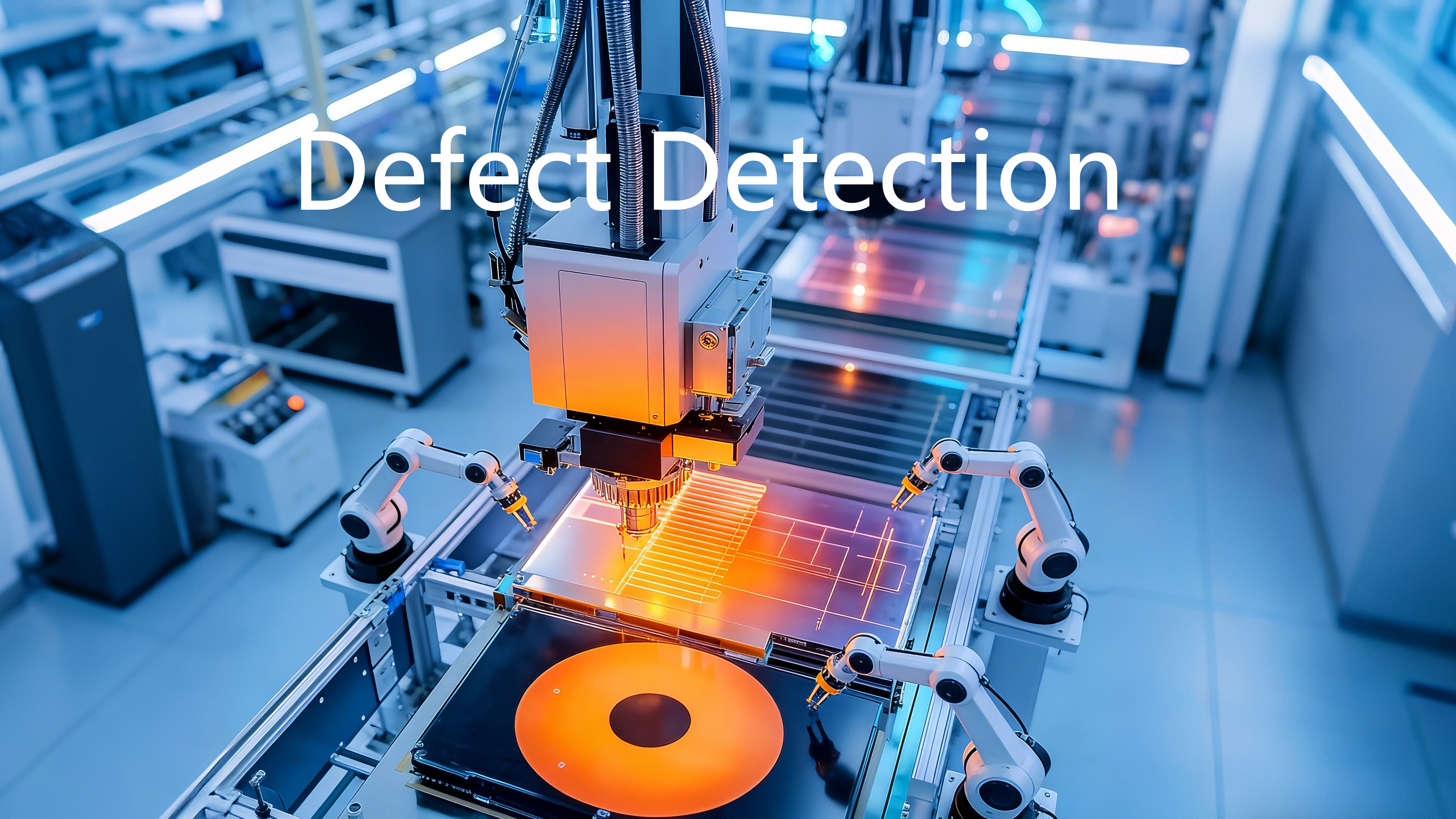
As intelligent manufacturing continues to evolve, visual defect detection has become a core method for ensuring production quality. By combining high-speed cameras, AI models, and edge computing, manufacturers can accurately identify product defects in real time, reduce labor dependence, and improve yield rates. Among many hardware choices, the ARM Industrial PC (ARM-based Industrial Computer) stands out with its high performance, low power consumption, flexible expandability, and long-term stability, making it a preferred computing platform for defect detection systems.
Why Choose ARM Industrial PCs for Defect Detection?
High-Performance AI Computing
Modern ARM SoCs—such as Rockchip RK3576, RK3568, RK3588, and Cortex-A76/A55 architectures—deliver strong computing performance.
Many ARM IPCs integrate GPU/NPU accelerators offering 1–20 TOPS, enabling:
-
Surface defect detection (scratches, dents, stains)
-
Dimensional inspection (offset, deformation)
-
Classification (OK/NG)
-
Image segmentation
-
OCR and code reading (dot codes, laser marks)
This makes ARM IPCs a cost-effective alternative to GPU-based industrial vision systems.
Low Power Consumption & High Reliability for Production Lines
Compared with x86 industrial computers, ARM IPCs provide:
-
Only 1/3 to 1/5 of the power consumption of x86 devices
-
Fanless thermal design for 24/7 stable operation
-
Industrial-grade temperature resistance and anti-vibration design
-
Better deployment flexibility for dense production environments
This makes them ideal for multi-station defect inspection systems that need large-scale deployment.
Rich Industrial Interfaces for Easy Integration
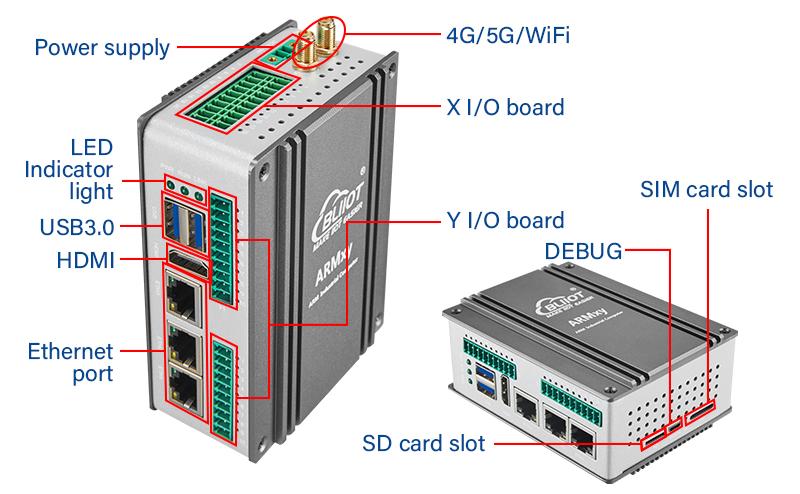
ARM IPCs typically offer comprehensive industrial I/O interfaces:
They can be directly integrated with:
-
PLCs (Siemens, Mitsubishi, Omron, etc.)
-
Robots and robotic arms
-
Servo systems and reject mechanisms
-
MES / SCADA systems
As a result, ARM IPCs act as the central edge node of a complete vision inspection workflow.
Flexible and Customizable Software Ecosystem
Based on Linux or Android, ARM IPCs support a wide range of AI and vision frameworks:
-
ONNX Runtime (ARM optimized)
-
TensorRT (available on certain SoCs)
-
OpenVINO (ARM version)
-
OpenCV
-
Lightweight PyTorch/TF Lite models
This makes it possible to integrate image processing, inference, communication, and UI into a single device.
Typical Defect Detection Scenarios for ARM Industrial PCs
Electronics Manufacturing (PCBA, connectors, camera modules)
Detectable issues:
Paired with multi-camera setups and segmentation models, ARM IPCs can perform millisecond-level inspection.
Metal Processing & Machining
Detectable defects include:
-
Scratches and dents
-
Burrs
-
Cracks
-
Dimensional deviations
-
Coating inconsistencies
With built-in NPUs, ARM IPCs can process high-resolution images in real time even in harsh factory environments.
Plastic / Injection Molding
Common defects:
-
Sink marks
-
Black spots
-
Flow marks
-
Wrinkles
Deep learning significantly enhances the accuracy of micro-defect recognition on plastic products.
Food, Packaging & Printing
ARM IPCs are ideal for:
Low power consumption makes them suitable for extensive deployment across long packaging lines.
Typical System Architecture
A complete ARM-based defect detection system typically includes:
-
Industrial Camera – captures high-speed images
-
ARM Industrial PC – performs preprocessing, AI inference, and defect analysis
-
IO module / Robot – handles sorting or rejection
-
MES/ERP System – records inspection data and generates reports
-
Cloud Platform (optional) – remote monitoring and model updates
Summary: Why ARM Industrial PCs Excel in Defect Detection
-
A lightweight yet powerful AI inference platform
-
Lower power consumption, ideal for large-scale deployment
-
Rich industrial I/O for seamless factory integration
-
Highly customizable software and OS environment
-
Reliable long-term performance in harsh conditions
With the growing adoption of deep learning and edge AI, ARM Industrial PCs are becoming essential computing units in intelligent inspection systems—delivering higher efficiency, lower cost, and more stable quality assurance for modern manufacturing.


