Industrial AI refers to the application of artificial intelligence (AI) technologies in industrial fields. It utilizes data analysis, machine learning, computer vision, and other technologies to optimize production processes, improve efficiency, reduce costs, and enable intelligent decision-making.
Industrial AI refers to the application of artificial intelligence (AI) technologies in industrial fields. It utilizes data analysis, machine learning, computer vision, and other technologies to optimize production processes, improve efficiency, reduce costs, and enable intelligent decision-making. It is one of the core drivers of Industry 4.0 and smart manufacturing.
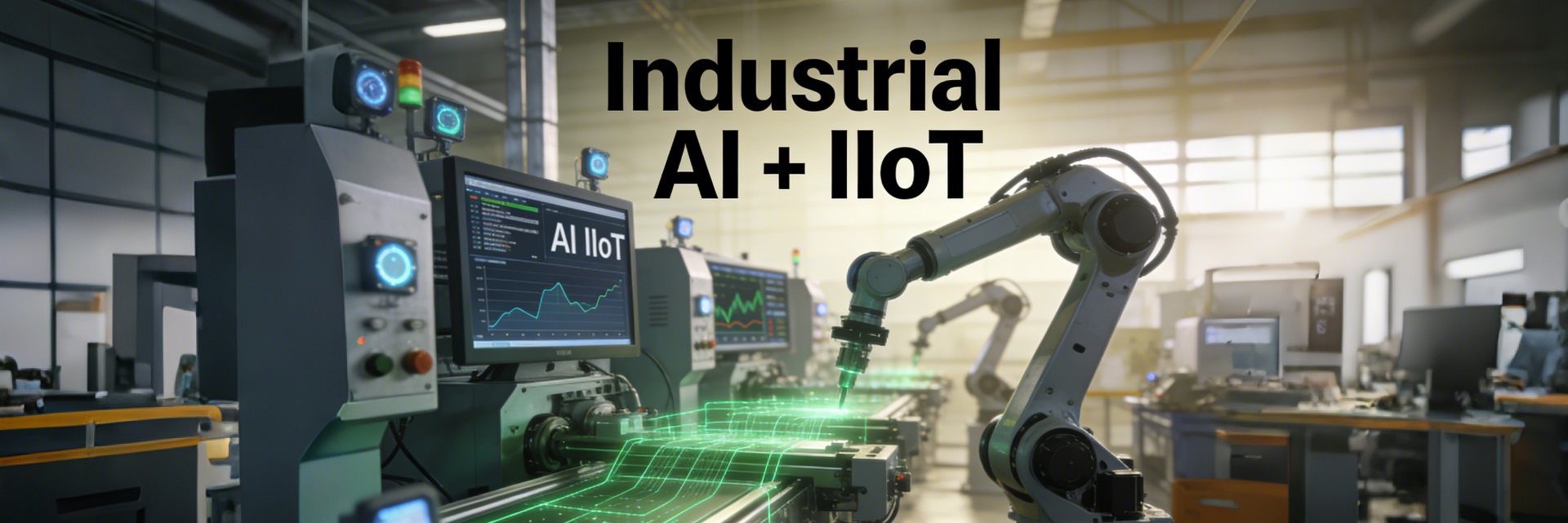
Key Technologies of Industrial AI
-
Machine Learning and Deep Learning
Used for predicting equipment failures, optimizing production parameters, quality control, etc.
-
Computer Vision
Applied to product defect detection, safety monitoring, automated guidance, etc.
-
Natural Language Processing (NLP)
Used for analyzing industrial documents, voice-controlled equipment, intelligent customer service, etc.
-
Internet of Things (IoT) and Edge Computing
Data is collected via sensors and processed in real-time on edge devices.
-
Digital Twins
Physical equipment is simulated through virtual models to achieve predictive maintenance and process optimization.

Specific Application Cases
1. Predictive Maintenance
-
Scenario: Factory equipment (e.g., fans, motors) collects data such as vibration and temperature through sensors.
-
AI Application: Machine learning models analyze the data to predict equipment failure times, enabling proactive maintenance and avoiding downtime.
-
Case: Siemens uses AI to predict gas turbine failures, reducing maintenance costs by 30%.
2. Intelligent Quality Inspection
-
Scenario: Products on production lines may have defects such as scratches or dimensional deviations.
-
AI Application: Computer vision systems automatically detect product defects, replacing manual visual inspections.
-
Case: Tesla factories use AI vision systems to inspect the quality of vehicle body weld points, improving inspection efficiency by 90%.
3. Production Process Optimization
-
Scenario: In chemical plants or semiconductor manufacturing, production parameters (e.g., temperature, pressure) affect the yield rate.
-
AI Application: AI models adjust parameters in real-time to optimize energy consumption and product yield.
-
Case: Intel uses AI to optimize lithography machine parameters in chip manufacturing, improving the yield rate.
4. Supply Chain Optimization
-
Scenario: Fluctuations in demand, logistics delays, and other issues in global supply chains.
-
AI Application: AI predicts demand, optimizes inventory, and logistics routes.
-
Case: BMW uses AI to predict spare parts demand, reducing inventory costs by 20%.
5. Robotic Automation
-
Scenario: Repetitive tasks such as assembly and material handling.
-
AI Application: AI enables robots to adapt, such as sorting disordered parts or collaborative assembly.
-
Case: Amazon warehouses use AI robots to sort goods, improving efficiency by 50%.
6. Energy Management
-
Scenario: High fluctuations in factory power consumption and energy costs.
-
AI Application: AI analyzes production plans and energy consumption data to dynamically adjust equipment operating modes.
-
Case: Schneider Electric uses AI to optimize energy usage in buildings and factories, achieving 30% energy savings.
7. Digital Twins and Simulation
-
Scenario: Testing production processes before launching new products.
-
AI Application: Digital twins simulate production to optimize production line layouts and processes.
-
Case: General Electric uses digital twins to optimize wind turbine designs, improving power generation efficiency.
8. Safety Production Monitoring
-
Scenario: Unsafe behaviors in factories, such as workers not wearing helmets or entering hazardous areas.
-
AI Application: Computer vision identifies risky behaviors in real-time and issues warnings.
-
Case: China's Baowu Steel uses AI to monitor blast furnace areas, reducing safety incidents.
Challenges and Trends
-
Challenges: Insufficient data quality, complexity of industrial scenarios, interpretability of AI models, difficulties in integrating with legacy systems.
-
Trends: Edge AI (low-latency real-time processing), integration of AI with 5G, automated machine learning (AutoML) to lower the barrier to usage.
Summary
Industrial AI addresses the pain points of traditional industries through intelligent methods and is reshaping manufacturing, energy, logistics, and other fields. As technology matures and ecosystems improve, it will play an even greater role in flexible production and green manufacturing in the future.


