BA115 collects data from 180 fans and dampers, with Modbus TCP transmission and a PLC handling air volume, valve, and temperature linkage logic to ensure precise automated control, improve paint durability, and optimize energy efficiency.
Case Details
Project Background and Requirements
Aircraft painting is a critical process in the aviation manufacturing field, where paint quality directly impacts the aircraft's aerodynamic performance, corrosion resistance, and service life. Among these, the air circulation status (air volume, airflow organization) and temperature stability in the painting environment are the core factors determining paint quality:
- Air Volume Control Issues: Insufficient air volume can lead to paint mist residue, causing particulate contamination on the paint surface; excessive air volume increases energy consumption and may cause rapid drying of the paint, resulting in cracks.
- Temperature Control Issues: Deviations from the process range (typically 20-25°C) can cause paint sagging (low temperature) or orange peel effect (high temperature), requiring strict control of fluctuations within ±1°C.
Traditional painting workshops rely on manual adjustment of fans and dampers, leading to issues such as delayed response, large parameter deviations, and high energy consumption. To address these pain points, this project proposes using Siemens BACnet ATEC devices as the core, with WINCC as the operation control system, to build an integrated "sensing - control - monitoring" system for precise and automated regulation of the painting environment.
Scheme Selection
The project evaluated the following three schemes:
| Scheme |
Description |
Pros and Cons |
| Scheme 1 |
ARMxy paired with BLIoTLink to collect BACnet ATEC; WINCC controls ARMxy via Modbus TCP or OPC UA; logic control and other modes require development on ARMxy. |
High flexibility, but complex development. |
| Scheme 2 |
BL118 Node-RED gateway; collects BACnet ATEC via Node-RED; WINCC connects via Modbus TCP; requires familiarity with Node-RED. |
Easy visual programming, but steep learning curve. |
| Scheme 3 |
IoT gateway BA115+ PLC; IoT gateway collects BACnet ATEC; PLC collects from IoT gateway; WINCC connects to PLC. |
Stable and reliable, suitable for rapid implementation. |
Due to the project timeline of only one month and the engineers' familiarity, Scheme Three was selected: The gateway collects BACnet ATEC via BACnet MS/TP; PLC collects from the IoT gateway via Modbus TCP; PLC handles logic and module switching programming.
Scheme Implementation
Sensing and Execution Layer
The entire business jet painting workshop requires 180 fans and dampers, with air volume and temperature adjustment functions, supporting the BACnet MS/TP protocol.
Notes:
- Due to the use of BACnet MS/TP protocol, devices must be equipped with a 120Ω terminal resistor.
Gateway
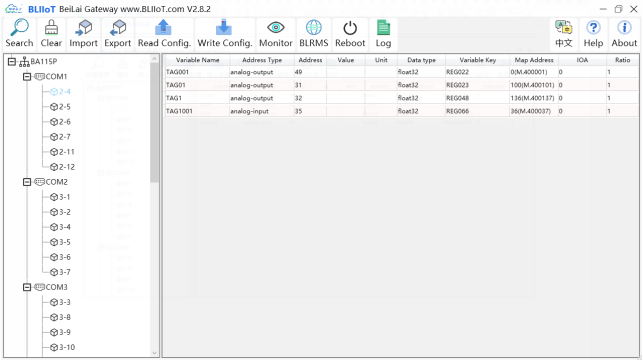
- Configuration: Due to the small CPU and memory of the gateway, 10 gateways are used, with each gateway collecting data from 18 BACnet ATEC devices.
- Protocol and Settings: The gateway's serial port end has a 120Ω terminal resistor, uses BACnet MS/TP protocol, with a polling cycle greater than 1S.
- Collected Data: Includes maximum and minimum air volume, temperature settings, damper feedback, air volume feedback, and other data from BACnet ATEC.
PLC Control Logic
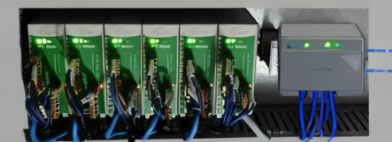
The PLC serves as the control core, with logic focused on the linked adjustment of "air volume - damper - temperature" and switching between multiple operating modes.
Notes:
- When the PLC writes commands to the gateway via Modbus TCP, intervals are required (otherwise, it can easily cause command accumulation on the gateway, overwhelming the device).
- Gateway CPU processing capacity: Up to 20 commands per second.
WINCC Exchange Interface
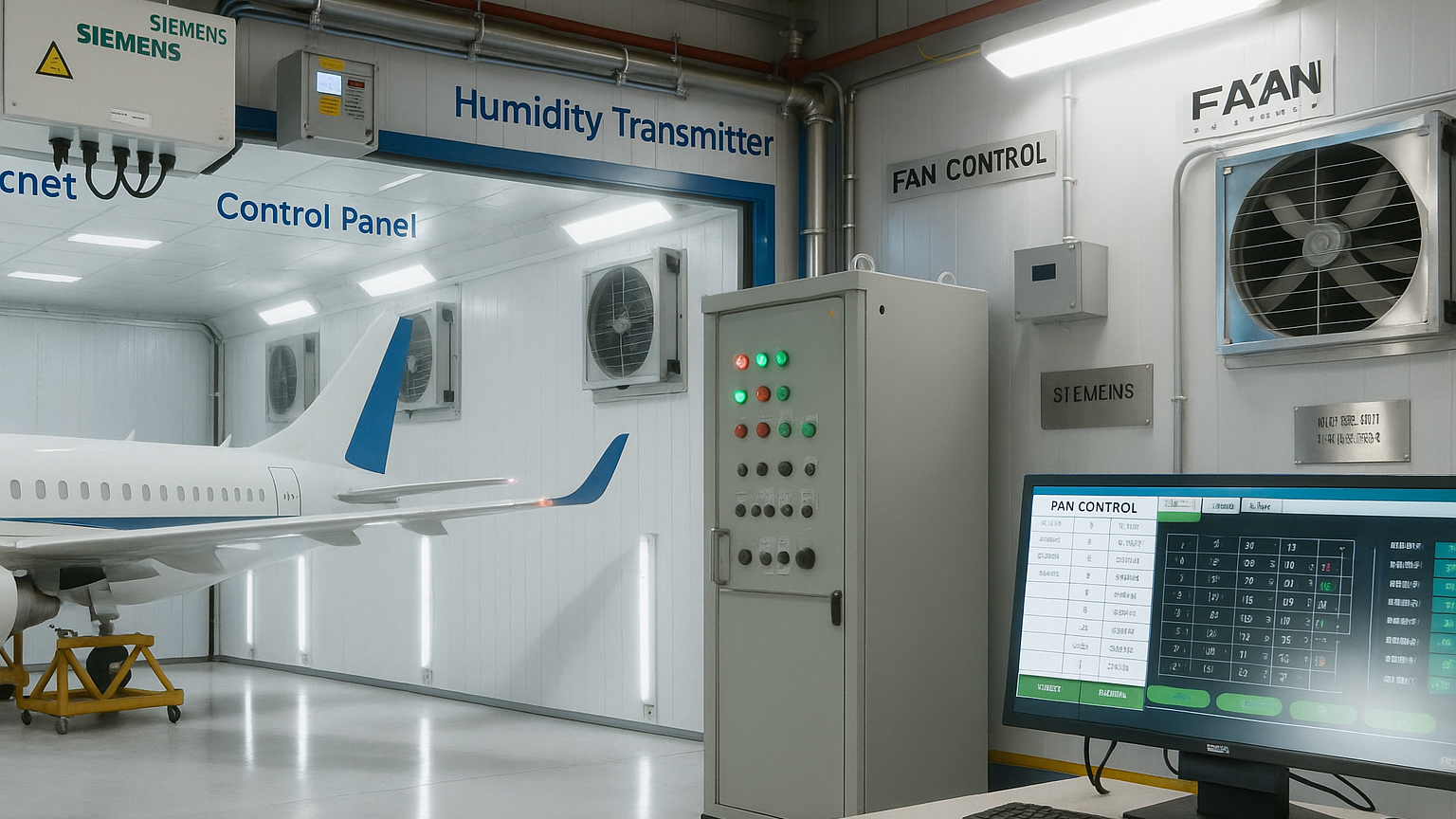
(The content in this section of the document is incomplete; interface design details, such as monitoring panels, alarm displays, and parameter adjustments, can be supplemented as needed.)
Project Background and Requirements
During the solution evaluation, an IoT gateway BA115 + PLC model was selected (BACnet MS/TP to collect data from 180 fans and dampers, Modbus TCP transmission, and PLC to handle the air volume, valve, and temperature linkage logic) to accommodate the one-month project schedule. During implementation, 10 gateways shared data collection (polling >1s, limited to 20 commands/s) to ensure precise automated control, improve paint durability, and optimize energy efficiency.


