Discover the Allwinner T507-H processor: industrial-grade ARM Cortex-A53 performance with wide temp range, rich I/O, and reliable multitasking for automotive and industrial use.
The T507-H is a high-performance embedded processor developed by Allwinner Technology, optimized for industrial and automotive applications. Based on the ARM Cortex-A53 multi-core architecture, it delivers improvements in computing power, stability, and scalability. Compared with the standard T507, the T507-H typically provides higher clock speeds, stronger reliability, and a wider operating temperature range, making it well-suited for long-term operation in harsh environments.
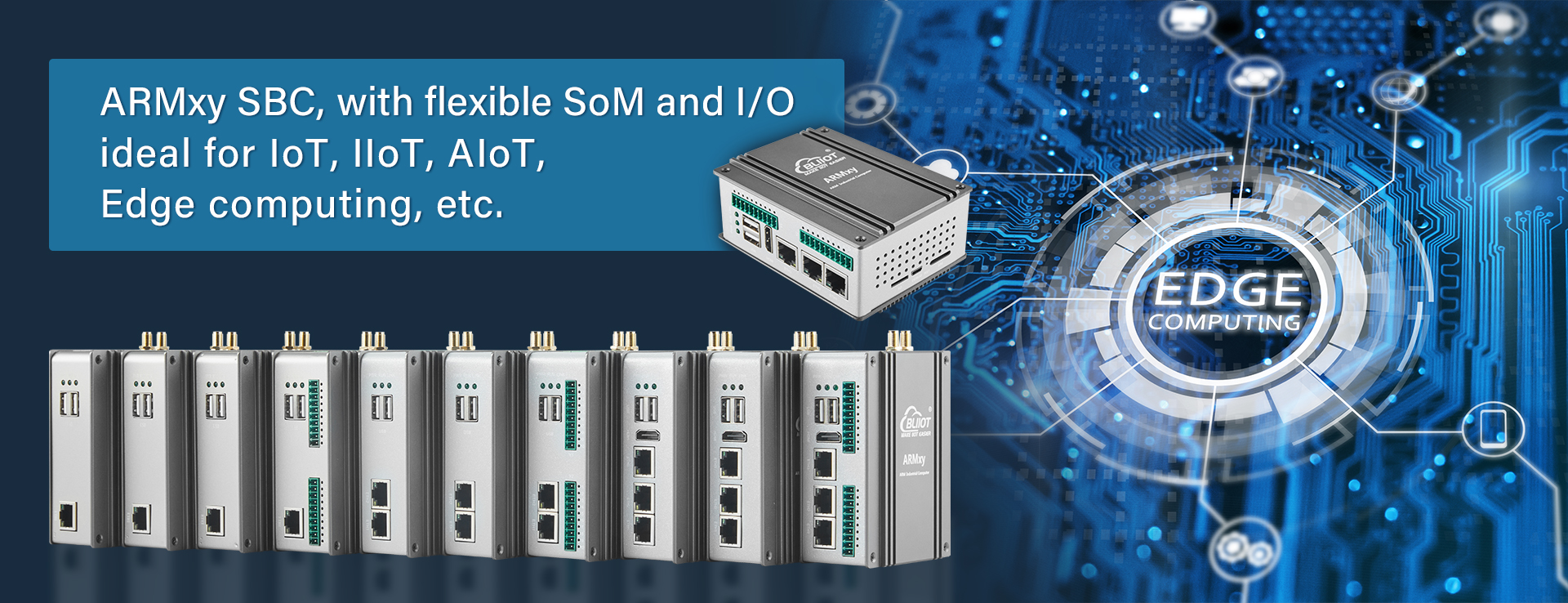
The BL340 ARMxy Embedded Industrial Computer from BLIIoT is built on the T507-H processor, offering optional ROM/RAM configurations and I/O expansion.
Key Performance Parameters
CPU:
-
Quad-core ARM Cortex-A53 (up to 1.8GHz+, with dynamic frequency scaling supported on some models).
-
64-bit instruction set, optimized for multitasking.
GPU:
-
Integrated Mali-T860 MP2/MP4.
-
Supports OpenGL ES 3.2/2.0 and Vulkan 1.0.
-
Suitable for 2D/3D graphics rendering.
Multimedia Processing:
-
4K@30fps H.265/H.264 video decoding and encoding.
-
Supports multiple video inputs (e.g., dual MIPI-CSI cameras).
-
HD display outputs via HDMI 2.0, LVDS, RGB.
-
Dual-screen independent display support.
Memory and Storage:
Peripheral Interfaces:
-
High-speed communication: USB 3.0/2.0, Gigabit Ethernet (with TSN for real-time industrial networking).
-
Industrial-grade interfaces: CAN 2.0B, SPI, I²C, UART, PWM, GPIO for industrial control.
-
Expansion: PCIe 2.0 (optional), SATA 3.0 (on some models).
Reliability Enhancements:
-
Wide temperature range (-40°C ~ +85°C), compliant with industrial and automotive standards.
-
ECC memory support (on selected models) for improved data integrity.
Application Scenarios
Automotive Electronics (Automotive-grade Applications):
-
Smart cockpit systems (central control, digital dashboards, rear-seat entertainment).
-
Vehicle telematics (T-Box), ADAS display units.
-
Advantage: Strong anti-interference, supports multi-screen interaction and automotive buses (CAN/CAN FD).
Industrial Automation and Control:
-
Industrial HMIs (Human-Machine Interfaces), PLC controllers.
-
Machine vision (AOI inspection, barcode recognition) requiring multi-camera inputs.
-
Advantage: Reliable operation in high-temperature, high-humidity environments; supports real-time Linux or RTOS.
Smart Retail and Commercial Devices:
-
Digital signage, vending machines, smart POS terminals.
-
Advantage: 4K video playback and mature touch interaction integration.
Edge Computing and Lightweight AI:
-
Face recognition gates, intelligent security with GPU/NPU acceleration.
-
Limitation: Pure CPU compute power is limited; complex AI requires external NPUs (e.g., AX620A).
Energy and Power Monitoring:
Advantages and Limitations
Advantages
✅ Industrial-grade reliability (wide temperature, long lifecycle)
✅ Rich peripherals (CAN, PCIe, multi-display support)
✅ Low power consumption (typical 3–5W), fanless design
✅ Cost-effective, an alternative to some Renesas/NXP solutions
Limitations
❌ No built-in NPU – AI depends on external modules
❌ Insufficient for high-performance computing (e.g., autonomous driving)
❌ Limited open-source BSP support – relies on vendor SDKs
❌ Restricted memory bandwidth – not suitable for large-scale data processing
Conclusion
The T507-H is positioned for mid-to-high-end industrial and automotive markets. It performs strongly in multitasking, multimedia interaction, and operation under harsh environments, making it ideal for applications requiring long-term stability and extensive interface expansion.
Recommended Use Cases: Automotive IVI, Industrial HMI, Smart Terminals.
Not Recommended For: High-performance AI computing, ultra-real-time control (better suited with FPGA or dedicated chips).


