Explore TI AM62x processor performance, features, and applications in industrial automation, edge AI, HMI, and energy systems with BLIIoT BL350.
1. Processor Overview
The TI AM62x is a low-cost, low-power Arm Cortex-A53/A15 multicore processor family from Texas Instruments, designed for industrial automation, edge AI, human-machine interfaces (HMI), and embedded vision applications.
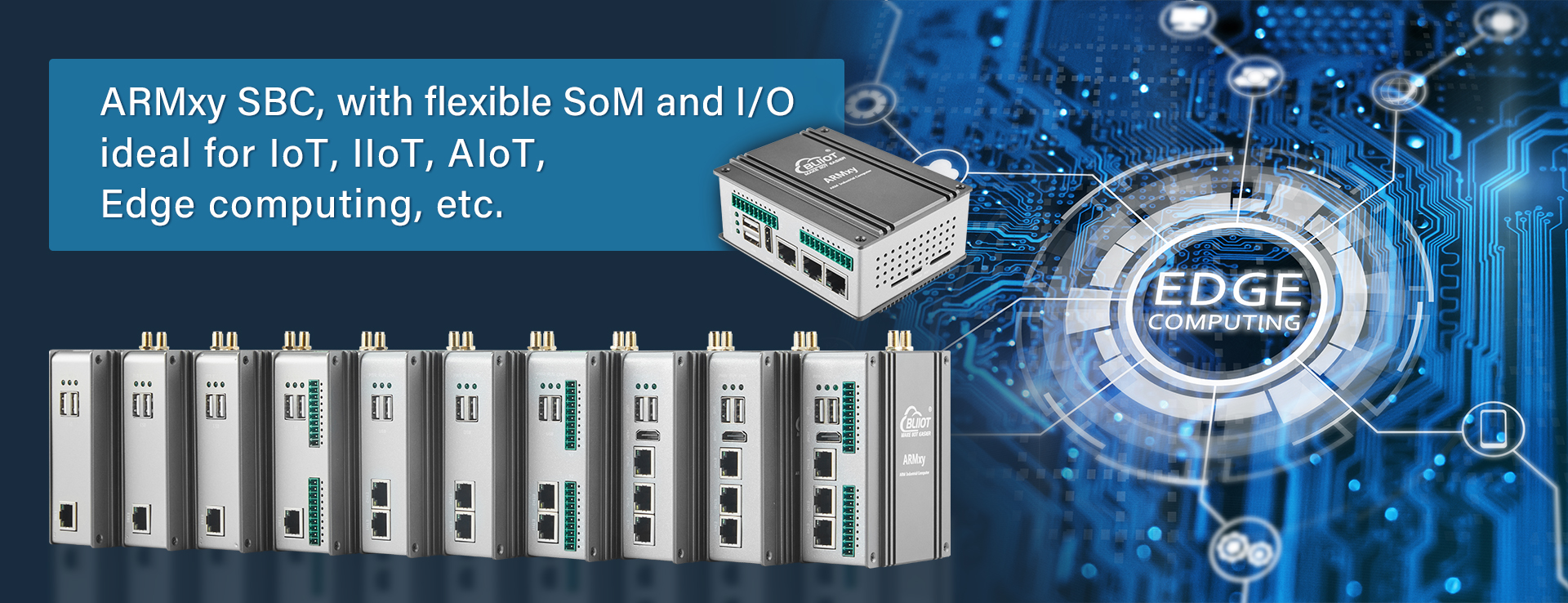
BLIIoT’s ARMxy BL350 Edge Gateway integrates the TI AM62x processor with optional ROM/RAM configurations and a variety of I/O interfaces. The series is known for its high energy efficiency, rich peripheral options, and industrial-grade reliability, making it ideal for edge computing scenarios requiring real-time control and lightweight AI.
2. Key Specifications
| Category |
Specification |
| CPU |
1–4x Arm Cortex-A53 (up to 1.4GHz) + optional Cortex-M4F real-time core (400MHz) |
| GPU |
Integrated GCN GPU (supports OpenGL ES 3.1/2.0 in select models) |
| AI Acceleration |
Optional 0.5–2 TOPS NPU (e.g., AM62A7), supports TIDL deep learning framework |
| Memory/Storage |
Supports LPDDR4, DDR4 (up to 4GB), eMMC 5.1, SD 3.0 |
| Multimedia |
1080p60 H.264/H.265 encode/decode, dual MIPI-CSI camera inputs |
| Peripheral Interfaces |
- Industrial: 2x CAN-FD, 8x UART, 4x SPI, Gigabit Ethernet (TSN)
- Display: LVDS/HDMI 1.4, dual-screen support
- Expansion: PCIe 3.0, USB 3.0, 2x PRU-ICSS (real-time industrial protocols) |
| Reliability |
Industrial-grade temperature range (-40°C to +105°C), functional safety support (ASIL-B/D options) |
3. Typical Application Scenarios
(1) Industrial Automation & HMI
-
Industrial Control: PLCs, motion controllers leveraging Cortex-M4F for low-latency tasks.
-
HMI: Touchscreen panels with LVDS/HDMI dual-display and OpenGL graphics acceleration.
-
Machine Vision: AOI inspection, barcode recognition via MIPI-CSI + lightweight NPU inference.
(2) Smart Edge Devices
(3) Automotive Electronics
-
IVI Systems: Entry to mid-level car infotainment, supporting Android Auto/Linux.
-
Cluster Displays: Digital dashboards (may require external GPU for enhanced rendering).
(4) Energy & Power
4. Strengths and Limitations
| Strengths ✅ |
Limitations ❌ |
| Industrial-grade reliability (wide temp, long lifecycle) |
Weak GPU for complex 3D rendering (external accelerator required) |
| High energy efficiency (<3W typical) |
Limited NPU performance (only in AM62A7 variants) |
| Rich real-time interfaces (CAN-FD/PRU) |
Memory bandwidth constraints (not suited for heavy HPC) |
| Robust TI ecosystem (SDK/RTOS support) |
Open-source community support weaker than Renesas/NXP |
5. Competitive Comparison (TI AM62x vs. Allwinner T507-H)
| Feature |
TI AM62x |
Allwinner T507-H |
| CPU |
4x A53 + M4F (real-time core) |
4x A53 |
| NPU |
0.5–2 TOPS (optional) |
None (external required) |
| Industrial Interfaces |
CAN-FD + PRU-ICSS |
CAN 2.0B |
| Display Output |
Dual-screen (LVDS/HDMI) |
Dual-screen (LVDS/HDMI/RGB) |
| Power Consumption |
<3W |
3–5W |
| Target Scenarios |
Real-time control + edge AI |
Multimedia + industrial HMI |
6. Conclusion
The TI AM62x is positioned for the industrial and edge computing market, offering:
-
Real-time capability: Cortex-M4F + PRU-ICSS for strict timing control.
-
Flexibility: NPU-enabled models (AM62A7) for lightweight AI inference.
-
Industrial compatibility: CAN-FD and TSN Ethernet for major industrial protocols.
Recommended Use Cases:
-
Industrial devices requiring real-time control (e.g., PLCs, HMIs).
-
Low-power edge AI devices (e.g., intelligent sensor gateways).
Not Recommended:
Alternative Options:


